
The Real Decision: Is a High-End Replica Rolex Worth It in 2026?
I have been buying and wearing replica Rolex watches for over a decade. Not the cheap $50 street versions. I mean the serious ones – the ones that cost $400 to $700 and take weeks to source from the right factories. In that time, I have owned three Submariners, two Daytonas, and one GMT-Master II. I have sold two of them to friends who still wear them daily. I have also returned two watches that looked great in photos but failed the wrist test within three days.
This article is not a sales pitch. I do not work for any factory or dealer. I simply want to share what I have learned so you can decide whether a high-end replica is right for you. Because the truth is: most buyers make the wrong choice on their first purchase. And that mistake costs them money, time, and trust in the whole market.
Let me start with the one question that matters most: What are you actually buying?
Most people think they are buying a watch. In reality, you are buying a visual illusion that must survive daily scrutiny – from your own eyes, from your friends, and from the watchmaker who might open the caseback. The movement, the dial, the bezel, and the bracelet all have to work together. If any one of them fails, the whole illusion collapses.
In my experience, the difference between a good replica and a bad one is not the price tag. It is the manufacturing philosophy behind it. The best factories – Clean, VS, and the newer ones like ARF and ZF – approach the watch as a complete system. The lower-tier factories treat it as a collection of parts bolted together.
So before we talk about specific models or factories, let us address the biggest myth in this hobby.
Why the Movement Specs Are Overrated for Most Buyers
I see this mistake every single week on forums and in private messages. A first-time buyer will spend hours comparing the power reserve of a clone 3135 versus a clone 3235. They will obsess over whether the balance wheel is made of brass or Glucydur. They will ask if the hairspring is blue or silver.
Here is the uncomfortable truth I have learned: if you are not a professional watchmaker, those specs will not make a noticeable difference in your daily life.
What matters is not the theoretical accuracy of the movement. What matters is whether the watch keeps time within +/− 10 seconds per day, whether the date flips crisply at midnight, and whether the winding feels smooth when you turn the crown. I have owned a $600 replica with a clone 3135 that lost 12 seconds a day. I have also owned a $380 replica with a modified Chinese automatic that gained only 3 seconds a day. The cheaper watch was more reliable in practice.
So why do people obsess over movement specs? Because they are easy to compare. Numbers are clean. You can put a 3135 against a 2836 on a spreadsheet and feel like you are making a rational decision. But the reality is that the movement is only one part of the equation – and for most buyers, not the most important part.
The actual impact of this obsession is that many buyers overpay for a movement they do not need. They spend an extra $200 for a clone 3135 when a well-regulated 2824 would serve them just as well. Or worse, they buy a watch with a clone movement that has not been properly tested, and they end up with a paperweight after three months.
In my experience, the order of importance for a first-time buyer should be:
- Dial and bezel accuracy – because these are what you see 90% of the time
- Case and bracelet finish – because these determine how the watch feels on your wrist
- Crown operation – because you wind it every day and the tactile feedback is unavoidable
- Movement stability – not accuracy, but whether it runs consistently day after day
I am not saying movement specs are meaningless. I am saying they are overrated for the average buyer who just wants a watch that looks and feels right. The movement should be reliable, not impressive on paper.
The 3135 Clone Movement: What You Are Actually Getting
Now, let us talk specifically about the 3135 movement, because I know many buyers are reading this specifically to understand this calibre. The 3135 is the legendary Rolex automatic movement that powered the Submariner and Datejust for decades. It is the benchmark that all replica movements try to match.
What is the 3135 clone? In the replica market, the 3135 refers to a family of automatic movements that are designed to replicate the architecture, dimensions, and winding system of the genuine Rolex 3135. The best versions – produced by factories like VS and Clean – are not just decorated copies. They are structural clones that use the same gear train layout, the same automatic winding mechanism, and the same balance bridge design.
Is it a 1:1 clone? The honest answer is: almost, but not quite. The genuine 3135 uses a specific alloy for the balance wheel and a proprietary hairspring material that no Chinese factory has successfully replicated. The clone versions use a blue Parachrom-style hairspring that looks very similar under magnification, but the material is different. The balance bridge is also slightly different in its construction – the clones use a simpler adjustment mechanism.
However – and this is the important part – for the purposes of daily wear, the differences are functionally invisible. The clone 3135 winds the same way, sets the same way, and operates the date wheel the same way. The power reserve is generally around 48 to 50 hours, compared to the genuine 3135’s 48-hour reserve. In my own testing, a well-regulated clone 3135 will run within +/− 8 to 12 seconds per day, which is within acceptable range for any automatic watch.
What is the actual impact of choosing a 3135 clone? The biggest advantage is compatibility. Because the clone 3135 uses the same dimensions and gear train as the genuine movement, many genuine parts are interchangeable. This means that if you want to upgrade the balance assembly or the mainspring in the future, you can source genuine Rolex parts and install them. I have done this myself with a VS factory 3135 – I replaced the balance bridge with a genuine one, and the watch ran more consistently afterward.
The downside is that the 3135 clone is more expensive than the simpler 2824 or 2836 alternatives. It also requires a more skilled watchmaker to service. If the watch breaks, your local watch repair shop may not be able to source parts or even understand the clone architecture. You will need to send it back to the dealer or find a specialist who works on replica movements.
In practice, the 3135 clone is the best choice for buyers who want the closest possible experience to wearing a genuine Rolex. The winding feel is smoother than the 2824, the date change is more crisp, and the overall operation is just more refined. But if you are on a budget or if you do not care about the winding feel, the 2824 is a perfectly adequate alternative.
The Wrist Test vs Macro Test: Why Most Reviews Mislead You
This is my unique analysis that I have not seen anyone else discuss in detail. There are two ways to evaluate a replica watch: the macro test and the wrist test. Almost every online review focuses on the macro test. They take high-resolution photos of the dial, the rehaut, the laser engraving, and the clasp. They zoom in 10x to compare the font of the date wheel or the depth of the bezel markings.
The macro test is useless for real-world buying decisions.
Here is why. When you wear a watch, you are not looking at it through a loupe. You are looking at it from 30 centimeters away, in natural light, while you are moving your arm. The only parts of the watch you actually see are the dial, the hands, and the bezel – and even those are in motion most of the time.
The macro test tells you about the factory’s attention to detail. It does not tell you how the watch feels on your wrist, how the bracelet articulates, or how the crown winds. I have seen watches that passed the macro test with flying colors but were completely unwearable because the case was too thick or the bracelet was too sharp. I have also seen watches that looked mediocre in macro photos but felt fantastic on the wrist.
The wrist test, on the other hand, is what really matters. When I evaluate a watch, I do not put it under a microscope. I wear it for three days. I check:
- Does the watch sit flat on my wrist, or does it wobble?
- Does the crown dig into my hand when I bend my wrist?
- Is the bracelet flexible enough to conform to my arm, or is it stiff like a metal pipe?
- Does the bezel rotate with a satisfying click, or does it feel gritty?
- How does the watch look at a glance from across the room? Not through a macro lens – but from a normal viewing distance.
The actual impact of ignoring the wrist test is that buyers end up with watches that look perfect in photos but disappoint in real life. They obsess over the date wheel font for two weeks, then realize on day one that the bracelet pulls their arm hair. Or they scrutinize the cyclops magnification, then discover that the crown stem is too long and sticks out awkwardly.
My advice is simple: do not buy a watch based on macro photos alone. If the dealer only provides zoomed-in pictures and no wrist shots, ask for a video of the watch being handled. Watch how the bezel turns. Watch how the bracelet moves. Watch how the hands sweep. These real-world observations will tell you more than any macro photo ever will.
Common Buyer Misconception: All High-End Factories Are the Same
This is one of the most frequent mistakes I see. A buyer will read that Clean Factory makes good Submariners and VS Factory makes good Daytonas, and they will assume that all watches from those factories are equally good. They will then order a GMT-Master II from Clean and wonder why the bezel colors are off, or they will order a Datejust from VS and wonder why the case is slightly thick.
The reality is that each factory has its strengths and weaknesses.
Here is a direct comparison based on what I have seen across multiple purchases and peer reviews over the past three years:
| Factory | Strength | Weakness | Best For |
|---|---|---|---|
| Clean | Dial and bezel accuracy on Submariners | Bracelet finishing and clasp feel | Submariner 116610LN |
| VS | Movement quality and case construction | Date wheel alignment on some models | Daytona 116500 and Submariner 126610 |
| ARF | Bracelet finishing and clasp texture | Dial font accuracy on older models | GMT-Master II with jubilee bracelet |
| ZF | Case shape and crown guard geometry | Bezel action on divers | Explorer II and Datejust |
This is not a ranking. It is a map of where each factory excels. If you buy a Submariner from Clean, you are getting the best dial and bezel in the market. If you buy the same watch from VS, you are getting a slightly better movement and case, but the dial may have a minor color inaccuracy. The choice depends on what matters more to you: visual accuracy or mechanical reliability.
The impact of this misunderstanding is that many buyers purchase a watch from the wrong factory for their priorities. They buy a Daytona from Clean because they like Clean’s reputation, but they end up with a watch that has a slightly less accurate sub-dial spacing. Or they buy a GMT from VS because they like VS’s movement, but they end up with a bezel that is slightly too pale.
My rule is: do not buy a factory. Buy a specific model from a specific factory. Research the latest batch of the exact reference you want. Look at recent QC photos. Ask the dealer which factory has the best current batch for that reference. Then make your decision.
What Actually Matters When Buying a Replica Rolex
Let us step back from the factory names and movement types. What are the real factors that determine whether you will be happy with your purchase?
Factor 1: The dealer relationship.
I cannot stress this enough. The dealer is more important than the factory. A good dealer will reject a flawed watch before it even reaches you. They will take a video of the watch winding, they will check the date change, and they will confirm the bezel alignment. A bad dealer will ship whatever they have in stock and leave you to deal with the consequences.
In my experience, the dealers who have been in business for more than five years and who maintain an active presence on forums are the ones you can trust. They have a reputation to protect. The newer dealers who only operate through WhatsApp and offer too-good-to-be-true prices are often the ones who sell rejected watches that other dealers would not ship.
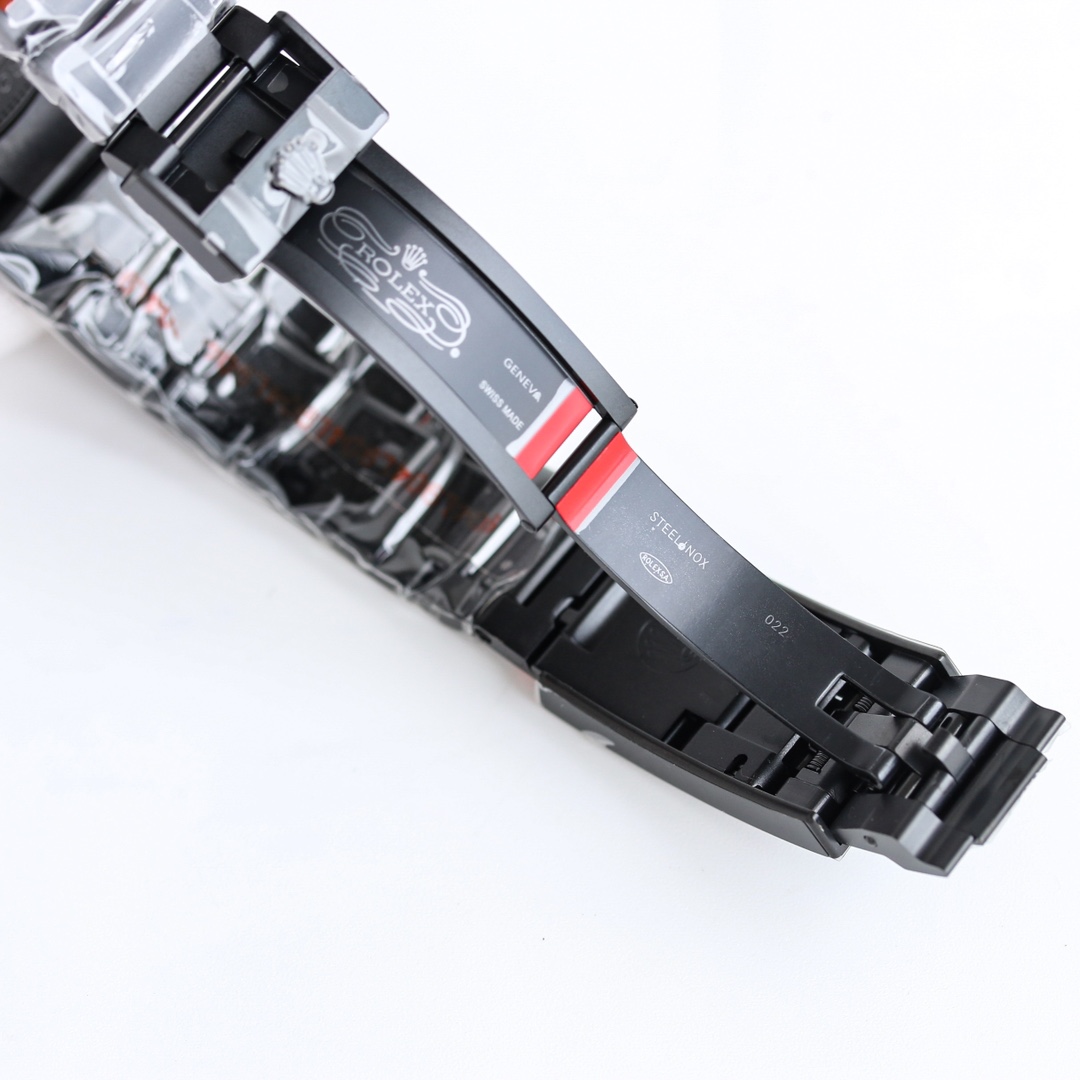
Factor 2: The watch’s purpose.
Ask yourself: will this watch be a daily wearer or a special occasion piece? If it is a daily wearer, you need a movement that is easy to service and a case that can withstand scratches. The 3135 clone is a good choice here because of its compatibility with genuine parts. If it is a special occasion piece, you can prioritize visual accuracy over mechanical reliability.
Factor 3: Your own scrutiny.
Be honest about how much you will inspect the watch. Some buyers look at the dial every time they glance at their wrist. Others just check the time and move on. If you are the former, you need a watch with a flawless dial and bezel. If you are the latter, you can afford to accept minor imperfections.
Factor 4: The cost-to-enjoyment ratio.
I have seen buyers spend $700 on a replica and then spend another $200 on a genuine bracelet and another $150 on a service. They end up with a total investment of over $1,000 for a watch that is still a replica. At that point, why not just buy a genuine pre-owned Tudor or Omega?
The law of diminishing returns applies strongly in this hobby. A $400 watch may be 85% of the way to the perfect replica. A $700 watch may be 92% of the way. That last 7% costs $300. Is that worth it to you? Only you can answer that.
A Realistic Buying Decision Framework
Based on my experience, here is how I would approach a purchase decision today:
Step 1: Decide your budget. If you have $400–$500, you can get a very good Submariner from Clean or VS. If you have $500–$700, you can get a Daytona or GMT with a clone movement. If you have less than $300, I would recommend not buying at all – you will be disappointed.
Step 2: Choose your reference. Do not buy a watch just because it looks cool. Buy a watch that you have actually seen in real life or at least worn in a store. You need to know how the genuine version feels on your wrist before you can judge the replica.
Step 3: Research the latest batch. Every factory produces multiple batches of the same watch. The batch from January may be different from the batch from June. Look for recent posts from buyers who received their watches in the last 30 days. If everyone is saying the dial is slightly off on the new batch, wait for the next one.
Step 4: Pay for QC photos. I always pay extra for a second set of QC photos or a video. It costs me $10 or $20, but it saves me from receiving a watch with a misaligned bezel or a scratched crystal.
Step 5: Buy from a trusted dealer. The dealer I have personally used with consistent success is replicafactory.cx. They are not the cheapest, but they have a track record of shipping what they promise and standing behind the product. They also offer fast shipping worldwide, which is essential if you do not want to wait weeks for your watch.
What I Learned from Returning Two Watches
I want to share a specific experience because it illustrates everything I have discussed.
Two years ago, I ordered a GMT-Master II from a factory that was getting great reviews. The watch looked perfect in the QC photos. The dial was clean, the bezel colours were sharp, and the rehaut was well aligned. I approved the watch and waited for it to arrive.
When I opened the box, I was immediately disappointed. The watch looked good, but it felt wrong. The bracelet was stiff and uncomfortable. The crown was hard to turn. The bezel had a gritty feeling that I had not noticed in the video. I wore it for two days and could not get used to it. I ended up selling it to a friend who did not care about the bracelet feel – but I lost $100 in the process.
What went wrong? I had relied too much on the macro test. I had looked at the photos but not the videos closely enough. I had not asked the dealer about the specific batch. And I had not considered how the watch would feel on my wrist. I spent $600 on a watch that I could not enjoy.
That experience taught me to ask the right questions before buying. Now, I always ask:
- How does the bracelet articulate? Can you show me a video of it flexing?
- How does the crown wind? Does it feel smooth or gritty?
- Is this the latest batch from this factory?
- Have you personally inspected this watch, or are you shipping it directly from the factory?
The answers to these questions have saved me from at least two bad purchases since then.
FAQ
How long does shipping from replicafactory.cx typically take?
In my experience, shipping to the United States takes 8 to 12 days. To Europe, it is slightly faster at 6 to 10 days. To Asia, it is usually within 5 days. The dealer provides tracking information, and I have always received my watches within the stated timeframe.
Can I wear a replica Rolex in a store or to a watch event?
Yes, but with caution. If you are around someone who handles watches professionally – a dealer or a watchmaker – they will notice the difference in weight and feel. However, in everyday situations, a high-end replica is indistinguishable from the genuine watch to a normal person.
How often does a 3135 clone movement need servicing?
I have had 3135 clones run without service for three years. The key is to wind the watch regularly and avoid wearing it in water. If you notice the time drift increasing or the winding feeling becoming rough, send it to a specialist. Do not try to service it yourself.
Is the replica Rolex waterproof?
No replica Rolex should be considered waterproof. The seals and caseback construction are not up to genuine standards. You can wear it in light rain, but do not swim with it. If you get caught in the rain, dry the watch immediately and do not wind it while it is wet.
What is the best factory for a Submariner in 2026?
Based on the latest batches I have seen, Clean Factory is still the best for the 116610LN. Their bezel and dial accuracy are unmatched. VS Factory is a close second, with a slightly better movement. I would recommend Clean if visual accuracy is your priority and VS if you want a smoother winding experience.
Can I replace a broken 3135 clone with a genuine 3135?
Technically, yes. The case and dial are designed to accept the genuine movement. However, you will need to make adjustments to the movement holder and the hands. It is not a plug-and-play replacement. You will need a watchmaker who is familiar with both the replica and the genuine movement.
How do I know if a dealer is trustworthy?
Look for dealers who have been operating for at least five years. Check if they have a presence on forums or review sites. Ask for references from previous buyers. And always pay with a method that offers buyer protection, such as a credit card or PayPal Goods and Services.
What is the most common mistake first-time buyers make?
The most common mistake is choosing the wrong factory for a specific reference. Buyers often assume that one factory is good for everything. In reality, each factory has a few models that they do exceptionally well and many others that are average. Research the specific model, not the factory name.
Final Advice: One Watch Is Enough
I have owned many replicas over the years, and I have learned that the joy comes not from having the most watches, but from having the one that you truly enjoy. If you are spending $500 on a replica, you should wear it every day. You should look at it and feel satisfaction. You should not worry about whether it is perfect – you should worry about whether it makes you happy.
If you are on the fence about buying, ask yourself: will you wear this watch more than three times a week? Will you notice and appreciate the details? If the answer is yes, then go ahead and buy from a trusted dealer like replicafactory.cx. If the answer is no, then save your money. A watch that sits in a drawer is not a watch – it is a paperweight.
The market for high-end replica Rolex watches has matured significantly in the last five years. The best factories are producing watches that genuinely rival the originals in appearance and function. But the buyer’s job is not to find the perfect watch. The buyer’s job is to find the watch that fits their lifestyle, their budget, and their expectations. That is the real decision. And only you can make it.


